
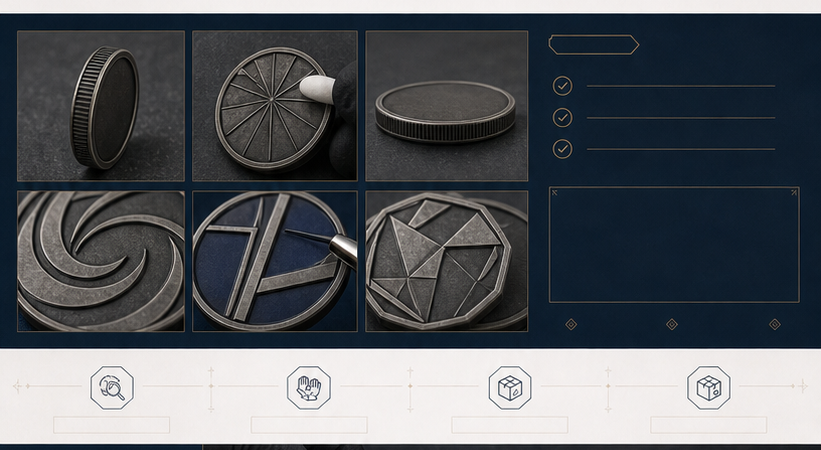
A custom zinc medal combines a recognition message with a physical object that must work with its ribbon, attachment, finish, packaging, and event schedule. Zinc alloy can support shaped outlines, raised relief, recessed areas, plating, enamel, engraving, and other visual treatments, but the final result depends on the full specification. This zinc medal design and manufacturing guide explains the decisions schools, sports organizers, clubs, brands, and recognition programs should make before requesting a quote.
Define the award program
Start with the event, recipient group, award levels, ceremony date, and expected quantity. A school sports medal, company anniversary medal, volunteer award, and retail souvenir may have different shapes, wording, finishes, ribbons, and packaging. State whether the medal is a one-time event or part of a program that may be reordered.
Separate quantities by gold, silver, bronze, placement, age group, or award level. Add spares when the ceremony is difficult to repeat. A clear distribution plan helps the manufacturer discuss the medal body, ribbon, packaging, and carton quantity together.
Choose zinc alloy for the intended visual route
Zinc alloy can be considered for shaped medals with raised and recessed detail, cutouts, custom borders, and a range of plating options. It may suit mascots, shields, emblems, buildings, animals, tools, and other recognizable outlines. The design must still be checked for thin areas, narrow openings, attachment points, and the relationship between relief and finish.
The material choice should follow the use case, design detail, size, quantity, and budget. Do not choose zinc alloy simply because a reference image uses it. Ask for a practical review of thickness, weight, relief, plating, ribbon connection, and packaging.
Select the medal size and thickness
Larger medals provide more room for wording, relief, and visual hierarchy, while smaller medals may be easier to wear, store, and ship. Thickness affects weight, edge feel, relief depth, and the attachment loop. Compare the physical size with the age of recipients, ribbon width, presentation method, and event setting.
Put the size, thickness, and approximate weight direction in the quote request. Review the smallest lettering and the loop area at the intended scale. A design that looks clear in a large digital file may need simpler lines when reduced to a wearable medal.
Use the front and back for different jobs
The front can prioritize the event emblem, mascot, award name, or central message. The back can carry the year, location, sponsor, placement, motto, or organization name. Keep the hierarchy clear and avoid forcing every event detail onto both faces.
If the medal has placement levels, identify which elements change and which remain constant. A shared die direction with controlled variations may support a consistent program, but the exact tooling and production route should be quoted for the project.
Plan relief, engraving, and enamel
Relief gives the medal depth and can emphasize a crest, mascot, or symbol. Engraving can suit dates, names, signatures, or fine lines. Enamel can add team or brand colors, but color fields need practical borders and enough area. A polished high point and antique recessed area create different contrast from a flat plated surface.
Choose the methods together. A deep relief may be visually effective but can affect the relationship between the ribbon loop, edge, and packaging. A small medal with many colors may need a simpler layout. Zincustomized reviews the artwork at the intended size before final approval.
Treat the ribbon connection as part of the product
The loop, ring, clasp, and ribbon are functional parts of the medal. Confirm whether the ribbon is printed, woven, solid color, striped, detachable, or supplied separately. Specify the ribbon width, length, fold, attachment direction, and any printed wording or logo.
Check the assembled sample when the ribbon presentation is important. The medal should hang in the intended orientation, and the connection should not cover the artwork or create an awkward twist. Include ribbon and packaging details in the same purchase record as the medal.
Choose plating and color direction
Gold, silver, copper, black, antique, polished, and brushed directions communicate different levels of formality and contrast. Gold may suit first-place or anniversary awards, while silver and bronze may be used for levels in a sports program. Antique treatment can emphasize recessed relief. The final choice should be reviewed with enamel, engraving, ribbon color, and packaging.
Record the approved finish with a sample or reference and do not rely only on a screen color. For repeat events, keep the approved artwork, finish, ribbon, packaging, quantity, and date so the next quotation starts from a clear specification.
Make the artwork production-ready
Provide front, back, side, and ribbon references where possible. Mark fixed logos, protected wording, dates, color fields, and areas that may be simplified. State whether a file is final artwork or an inspiration direction. Confirm that you have permission to use organization marks, event logos, mascots, and sponsor names.
Consolidate revisions into one list. Check spelling, award levels, dates, and placement wording before approving. A written version record prevents a late design change from being mistaken for the approved production file.
Compare total cost instead of unit price alone
Medal costs can include tooling, casting, relief, engraving, plating, enamel, ribbon, hardware, sample, packaging, inspection, carton packing, shipping, and payment or acquisition costs. Use the same quantity and specifications when comparing suppliers. Ask which items are included and which are quoted separately.
Event buyers should compare the complete delivered requirement. A lower unit price may exclude a ribbon, presentation box, sample, finish, or freight assumption. The final cost should be assessed with event timing and inventory risk in mind.
Plan sampling and quality review
A physical sample can help confirm size, weight, relief, plating, enamel boundaries, loop position, ribbon attachment, and packaging fit. Before approval, check the front and back, edge, orientation, spelling, finish, color, and assembled presentation.
A sample is a reference, not a promise that every future photograph or reorder will be identical. Keep the approved sample notes and specification together. If a change is required after sampling, ask how it affects tooling, timing, and cost.
How Zincustomized supports zinc medal projects
Zincustomized reviews custom zinc alloy metalwork, stainless steel and copper alternatives, plating, enamel, engraving, ribbons, packaging, and reorder records. The focus is on matching the recognition purpose with a workable specification and approval path. We do not invent certifications, customer counts, client logos, or guaranteed outcomes.
Send the award purpose, artwork, size, thickness, ribbon direction, quantity, finish, packaging, destination, and event date through the custom medals page, quote request page, or WhatsApp.
Frequently asked questions
Can zinc medals include ribbons? Yes, ribbon and attachment details should be specified with the medal body. Can the front and back be different? Yes; define the hierarchy and wording for each face. Should I order a sample? A sample is useful when size, relief, finish, ribbon, or packaging matters. What should I send for a quote? Send artwork, dimensions, quantity, award levels, finish, ribbon, packaging, destination, and date.
Keep the event record ready for reorders
After the medal is approved, save the final front and back artwork, edge treatment, dimensions, thickness, finish, ribbon, packaging, quantity, and delivery reference. This record is useful when an annual tournament or school program returns with a new year or award level. Identify which details are allowed to change and which must remain fixed. A new purchasing contact should be able to understand the product without relying on a screenshot or an old email thread.
Before distribution, inspect the packed product as well as the loose medal. Check that the ribbon is attached in the intended direction, that the finish is consistent with the approved reference, and that boxes or cards protect the surface. These practical checks help separate a design decision from a packing or handling question and make the next supplier conversation more precise.
Medal production also depends on the attachment system
For a zinc medal, the face design is only part of the specification. The ribbon, jump ring, clasp, lanyard, or other attachment affects how the medal is worn and packed. Confirm the attachment position, ribbon width, ribbon colors, and whether the medal needs to face forward when worn. These details should appear in the approval proof rather than being left to interpretation.
Relief depth, edge profile, plating, and polishing should be reviewed together. Fine details that look strong in a flat drawing may need simplification or stronger contrast to remain clear after casting and finishing.
Medal details that should be approved together
A medal is a small assembled product, so the face design, attachment, ribbon, and packing should be reviewed as one system. The diameter and thickness influence weight and handling. The relief and edge profile affect how the design reads under different lighting. The ribbon width, colors, length, and attachment position influence how the medal hangs. If the medal must face forward when worn, the orientation of the jump ring or other attachment should be shown in the proof.
Start with the award purpose and recipient group. A school participation medal may need a friendly, readable design and economical packing. A competition medal may need a more prominent center emblem, a year field, and a ribbon that matches the event identity. A corporate recognition medal may need a restrained finish, a short message, and presentation packaging. These are different design and purchasing decisions even when the basic shape is similar.
Medal approval checklist
- Confirm the medal shape, diameter, thickness, approximate weight, and edge treatment.
- Show front and reverse artwork at the intended scale.
- Specify relief, engraving, enamel, plating, polishing, or antique areas.
- Confirm ribbon material, width, length, colors, printing, and attachment position.
- Decide whether items are bulk packed, individually bagged, carded, or boxed.
- Approve the final proof and retain it with the reorder specification.
Complex designs should be tested for the smallest lettering, narrow lines, deep recesses, and color boundaries before production. If a medal includes names, dates, serial numbers, or event divisions, provide the data format early. The factory can then confirm the placement and whether engraving or printed information is more suitable. A clear approval record reduces late changes and makes the next event easier to plan.
For a complete project, review the custom medals product page, the custom medal MOQ guide, and the custom metal product proofing service. Send the event date and delivery destination with your quote request.