
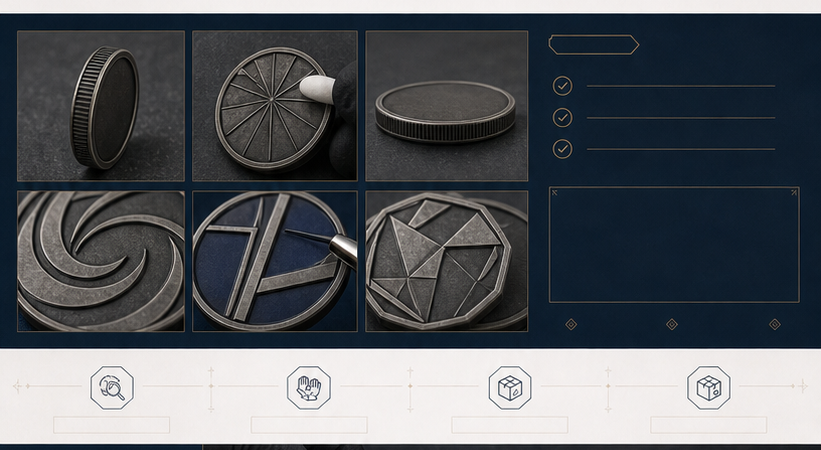
Ordering custom 925 sterling silver jewelry requires more than sending a logo and choosing a product type. Brands and wholesale buyers should define the jewelry form, dimensions, weight direction, finish, stones or enamel, S925 marking, packaging, quantity, sample expectations, and target date. A complete brief lets the manufacturer discuss a practical route and reduces avoidable revisions.
This guide is for private-label brands, retailers, designers, gift companies, and wholesale buyers planning custom rings, pendants, earrings, bracelets, charms, or related 925 silver products. Zincustomized uses artwork review, material and finish discussion, sample approval, and production communication to support the project.
Define the collection before the individual item
Start with the role of the jewelry collection. Is it a permanent retail line, a seasonal launch, a private-label range, a gift program, or a small test order? Identify the target customer, price positioning, product types, expected quantity, packaging direction, and whether the items should look like one collection.
A collection brief can define repeated elements such as logo placement, plating family, chain style, stone direction, engraving treatment, card format, or box size. It should also explain which details may vary by item. This prevents each product from being quoted as an unrelated object and supports more consistent reorders.
Prepare artwork and reference files
Provide the clearest artwork available and identify fixed brand elements. Vector files can help with clean outlines, while high-resolution images, sketches, CAD files, or written descriptions can support early discussion. Show front, back, side, connection, and scale references when the product has multiple components.
Mark small text, engraved wording, dates, symbols, stone locations, enamel areas, and any element that must remain unchanged. If the design is an inspiration direction rather than final artwork, state that clearly. The manufacturer can then discuss simplification, relief, engraving, polishing, and attachment details before a final proof.
Specify the 925 silver product type
Different jewelry types require different dimensional and functional information. A ring needs size, band width, thickness, interior comfort, and any stone or engraving direction. A pendant needs height, width, bail or loop details, chain compatibility, and the visual relationship between front and back. Earrings need the post, hook, drop length, pair matching, and packaging. Bracelets need length, connection, clasp, and fit direction.
State which dimensions are fixed and which can be adjusted. A manufacturer can often help refine a proportion, but the buyer should decide what the customer experience requires. Keep the same units throughout the brief and identify whether measurements refer to the metal body, the finished item, or the full assembled product.
Confirm the S925 marking
Discuss the S925 mark as part of the specification rather than adding it at the end. Confirm whether the mark is required, where it should appear, how large it can be, and whether it should be stamped, engraved, or handled through another approved route. The buyer remains responsible for confirming the legal and market requirements for the target destination.
S925 is a material-related marking and should not be used to make unverified claims about the product or its effects. Keep the marking instruction in the artwork and purchase record, then check it during sample approval.
Choose plating and surface finish
925 sterling silver can be presented with polishing, brushed texture, gold plating, rhodium-style bright silver direction, black treatment, antique contrast, or another approved finish. The selected surface changes how engraving, raised detail, stones, enamel, and packaging are perceived.
Ask for the finish to be shown on the actual product design. Bright surfaces can make fine engraving less contrasting, while an antique direction may emphasize recessed details. For a collection, record the finish name, reference sample, plating direction, and care communication so future products can be compared consistently.
Discuss stones, enamel, and assembly
If the jewelry includes stones, enamel, chains, jump rings, posts, clasps, or other components, list them separately. Identify whether the stone is decorative or structural, the desired color or reference, the setting direction, and the number of pieces required. For enamel, confirm color areas, borders, texture, and how the fill should relate to the metal.
Assembly affects the final product and the inspection checklist. A pendant with a loop, a bracelet with a clasp, and an earring with a post all need their connection points reviewed. Ask to see the assembled sample, not only a flat artwork proof.
Plan samples and approval
A sample is useful when the buyer needs to evaluate size, weight, finish, fit, comfort, connection points, packaging, or the physical effect of the S925 mark. Before approving, check spelling, dimensions, surface appearance, symmetry, polish, plating coverage, clasp or post function, and packaging fit.
One person should consolidate design and purchasing feedback. Keep the approved artwork, sample notes, finish, packaging file, quantity, and date together. This record is particularly important for private-label reorders because a later product may need to match an existing collection.
Compare quotes carefully
Use the same material, weight direction, size, finish, stone or enamel requirements, packaging, quantity, sample scope, inspection, shipping, and delivery assumption when comparing suppliers. Ask whether tooling, samples, packaging, and freight are included. A low unit price may exclude a requirement that another quotation includes.
For a collection, compare the total project scope as well as the unit price. The custom silver jewelry OEM route and private-label jewelry page can help organize the discussion.
Packaging and care information
Choose bulk packing, individual pouches, jewelry cards, presentation boxes, or retail-ready packaging based on the sales channel. Confirm box dimensions, card wording, labels, barcode areas, and assembly. Packaging should protect polished surfaces and small components during storage and shipping.
Prepare accurate care information before launch. Explain realistic handling and storage without promising that a finish will never change. If the product is plated or includes enamel, the buyer-facing care note should reflect the approved material and finish.
How Zincustomized supports a silver jewelry order
Zincustomized helps buyers connect product design, 925 sterling silver specifications, dimensions, finish, marking, assembly, packaging, sampling, and reorder records. We do not invent certifications, client numbers, or guaranteed outcomes. The exact specification is confirmed for the project and target market.
To begin, send product type, artwork, sizes, preferred finish, quantity, packaging, destination, and target date through the 925 sterling silver manufacturer page, quote request page, or WhatsApp.
Frequently asked questions
What information is needed for a custom 925 silver quote?
Provide the product type, artwork, dimensions, weight direction, finish, S925 marking, stones or enamel, packaging, quantity, destination, and target date.
Should I request a sample?
A sample is useful when size, weight, finish, comfort, connection points, marking, or packaging needs to be checked in hand.
Can Zincustomized support private-label packaging?
Private-label packaging can be discussed as part of the project. Provide brand files, packaging type, quantities, labels, and the target sales channel.
Does S925 guarantee a particular result?
S925 identifies a material specification, but the buyer should confirm the relevant market requirements and should not treat the mark as a guarantee of unrelated performance.
Prepare the launch and reorder file
Before the first shipment, prepare the product name, material wording, dimensions, care note, packaging copy, and photography plan. Make sure the website, packaging, internal purchase order, and approved sample use the same product specification. If a collection contains several sizes or finishes, label each version clearly so a reorder does not use the wrong artwork or plating direction.
A reorder file should include the final artwork, sample photographs, dimensions, weight direction, S925 marking instruction, finish, packaging, quantity, and delivery notes. This record allows Zincustomized and the buyer to discuss a future run from the same reference while still checking any new market or product requirements.
What a 925 sterling silver jewelry brief should include
Ordering custom 925 sterling silver jewelry is easier when the design brief distinguishes product decisions from brand decisions. Product decisions include the jewelry type, dimensions, thickness, weight range, clasp or attachment, surface texture, stone or enamel requirements, engraving, and plating. Brand decisions include the logo treatment, packaging style, collection name, product card, and any variable information. Keeping these items separate helps the factory team identify which details affect tooling, sampling, and per-piece cost.
State clearly whether 925 sterling silver is required as the main material or whether another metal is being considered for a related product line. If the project includes gold, rhodium, antique, or other surface treatments, specify whether the finish is decorative and which reference should be reviewed. Do not rely only on a screen image for a metallic color decision. A sample, finish reference, or controlled production proof is more useful when the visual match is important.
Information to send with the first inquiry
- Front, reverse, and side artwork, including any engraving or variable text.
- Target dimensions, thickness, approximate weight, and wearing method.
- Material requirement, surface finish, color fill, stones, or other decorative details.
- Quantity for the first order and expected reorder pattern.
- Packaging, product-card, shipping, and target delivery information.
During review, ask how the design will be manufactured and where a sample is most valuable. Small lettering, narrow gaps, sharp corners, thin sections, and moving components may need adjustment before tooling. A proof should show scale, finish direction, attachment position, and any variable data. Once the proof is approved, keep the final artwork and specification together for future reorders.
Zincustomized supports custom 925 sterling silver jewelry manufacturing and can review a design brief before quotation. Send the artwork and target quantity through the quote request page or contact the team on WhatsApp for a project-specific review.